
There’s this something in saying things online. We feel braver than we really are. We say things we would never dare say in person. Before we realize it, cruelty can slip out of us so easily it’s almost expected.
When I was younger and spineless, I used to excessively vent online too. It was how I used to release my frustrations over things beyond my control. I convinced myself that doing it online was harmless. In my mind, I was doing it in a vacuum. I wasn’t thinking that some people might see them, remember them, or talk about them. I didn’t realize that I was spreading negativity, and online, I was saying it out loud. It may seem satisfying, but it never solved anything.
My screen made it easier to hide the parts of myself I didn’t want to examine. But after some time, I realized that what we say online rarely stays where we put it. And what feels private is not as private as we think. Worse, it can affect other people.
The internet is actually a good place for me. It has allowed me to encounter ideas, people, and perspectives that challenged me and even changed me. It also let me meet people who have the same interests, history, and values that I do that sometimes I regret not finding them sooner in my younger years.
I’ve been online for a very long time now. Though I didn’t participate in conversations before, I have seen different types of conversations surrounding our community.
Lately though, many things have fundamentally shifted. The conversations online were not as engaging and informative as they once were.
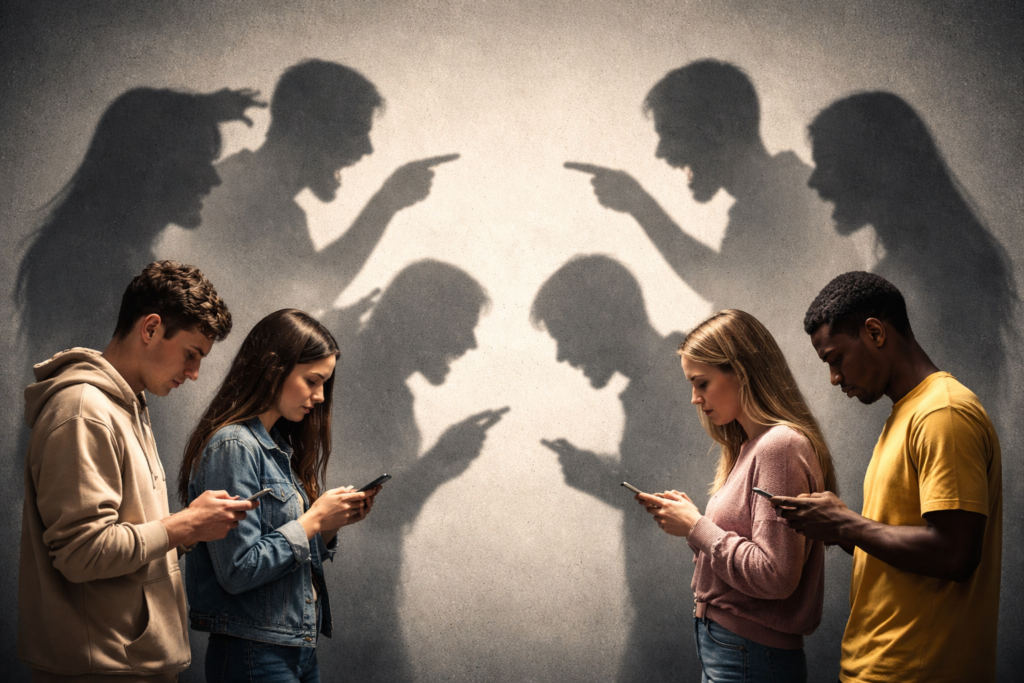
People now assume the worst of intentions. Instead of engaging with the idea, they attack the people who hold them.
Differences are punished with cruelty rather than explored with curiosity, and this is so evident online where we can know the thoughts of others. When a person voices out his conviction, he is met with a level of contempt greater than what is often directed at corrupt government officials.
The algorithm has slowly led us back to a kind of tribalism that society once tried to move away from. It made it easy for us to find people who have the same biases, frustrations, and prejudices we have. Sometimes it’s helpful because finding our tribe gives us confidence that what we believe is right.
However, when we encounter different beliefs and opinions, the algorithm also makes it easy for us to gather our “tribe” and attack our perceived opponent. We dig into their past not to understand their context but to discredit anything they say.
And it is disheartening to see these among people who should have been on the same boat.
Social media is no longer a space that fosters meaningful conversations, and I know I am not the only one who feels this way.
I’m not online now as much as I used to because I have more of a life offline than I once did. I’ve been learning how to keep our house organized without restricting our three small kids’ freedom to play. I occasionally homeschool our toddler. I work out at home using small equipment to regain my weakening bones after giving birth three times in three years. I follow the cookbook I created based on our small budget and the ingredients I can easily find in our developing city.
I still go online from time to time. At home, I have a calm husband who thinks that the ongoing war and other calamities are all part of God’s perfect plan and we can’t do anything about it. He’s actually right. But I still have to process the news with others and I can only do it online.
There are people and systems that intentionally and repeatedly harm others that need to be collectively called out, like Trump and his allies.
Whenever I write, I constantly remind myself to treat humans as humans, especially those who hold different beliefs than I do.
Because on the other side of the screen is also an ordinary human being like me who also has a family who loves them and wait for them every day to come home safely.