People outside the BARMM Region probably wonder why Bangsamoros can’t just be a peaceful place. Or why the Moros can’t just do whatever the government wants.
The answer goes less beyond laws and policies and is more about identity and historical justice.
What does Bangsamoro mean?
Today, Bangsamoro can also refer to the Bangsamoro Autonomous Region in Muslim Mindanao (BARMM), a regional government inhabited by the Muslims in the Southern part of the Philippines where they have their own culture and laws.
So basically, Bangsamoro now refers to the Muslim minorities in the Southern Philippines and the region they live in.
But a long time ago, they were only known as Moro and it was the Spaniards who gave them that name.
When the Spaniards explored Mindanao during their colonization of Luzon and the Visayas, they saw that people in Mindanao were totally different from those in Luzon and Visayas.
But their culture looked familiar.
They wore the same clothes and performed the same prayers like the Muslim people they saw in Morocco, Algeria, Tunisia, and western Libya who are called Moors.
Spanish often changes the ending of words for pronunciation, so they called the Mindanao Muslims as Moros.
During that time, people in Mindanao still did not yet identify with each other. They only belong to their Sultan and their tribe.
But over time, they gradually embraced the term Moro and became their identity as it affirmed that the Spaniards see them as “different” from the.
From Moro to Bangsamoro
In contemporary times, when Muslim leaders fought for their rights, i.e. MNLF, they came up with a name that can serve as an umbrella term for all the Muslim ethnolinguistic tribes in Mindanao since they share the same long history and identity.
So they came up with the term Bangsamoro in the 1970s, combining the terms Bangsa, or nation in Malay, and Moro, the Muslim people of Mindanao and Sulu.
This is how their modern shared political identity started.
Why Early Countries Colonize Other Countries
A long time ago, a nation was considered more powerful if it had more land, more people, and more wealth.
So early rulers went to other lands, forced them to follow their rules, change their culture or religions, and then take control over them.
This was often done by European countries like Spain, Britain, France, Portugal, and the Netherlands. And they also colonize outside Europe. They crossed the Pacific Ocean.
Because countries in Asia are rich in gold, natural resources, spices, silk and metals, and unique crops. Resources that European countries didn’t have.
But, instead of buying them from these countries, the European colonizers want the entire lands and people where they came from.
So we can say that a long time ago, colonization was actually a trend especially in European countries.
And that’s how Spain reached Luzon and Visayas and later named it as Las Islas Filipinas, after King Philip II of Spain.
Here is the Bangsamoro side of history they didn’t teach us in school.
Mindanao Is Older than the Philippines
Before the Philippines became the Philippines, Muslims in Mindanao already had their own political system, culture, laws, and traditions.
They even have strong relationships with neighboring countries.
So when colonizers saw Mindanao, they didn’t “discover” anything. They walked straight into fully functioning, organized polities. Not a scattered, loose tribe.
Related: who are the Moros
How the Moros lived before
When Moros gradually embraced Islam, it gave their way of living a formal system:
Governance. They adapted the sultanate system. There were four sultanates: the Sultanate of Maguindanao, the Sultanate of Sulu, Sultanate of Buayan and Confederate Sultanate of Lanao. Although the four sultanates had overlapping interests, including rivalries between Maguindanao and Buayan, they stood united against Spanish and American colonizers through their shared Islamic brotherhood.
Education. It taught them how to read and write using Jawi and Sulu Arabic, connecting the Moros to the wider world.
Adab or Adat. Adat is the unwritten laws that govern the Moros. When they embraced Islam, they don’t have to choose between Islam and culture because it fits naturally into values that they already practice such as honoring guests, respect for elders, respect for authority, and community justice. Adat is passed down from generations through oral transmission and upbringing.
International relations. Islam linked them to the Brunei Sultanate, Malay Muslim polities, and Arab traders that guaranteed them safer trade routes and military alliances.
Honor or Maratabat. Islam didn’t just give them religion, it gave them an identity strongly linked to maratabat. In fact, their adab or adat reflect their honor while also protecting the honor of others.
Why Spain Failed to Conquer Mindanao
When the Spanish colonized Luzon and Visayas, they attempted to enter Mindanao too. But over 300 years of attempts, the Moros resisted and fought back.
Because at those times, Muslims in Mindanao already had their sultanate system. Like any other governments, they already had their strong maritime and naval warfare expertise. And their long time of alliance with other Muslim countries also let them trade and own war weapons.
But what Spain feared the most was their bravery.
Martyrdom as a Form of Worship
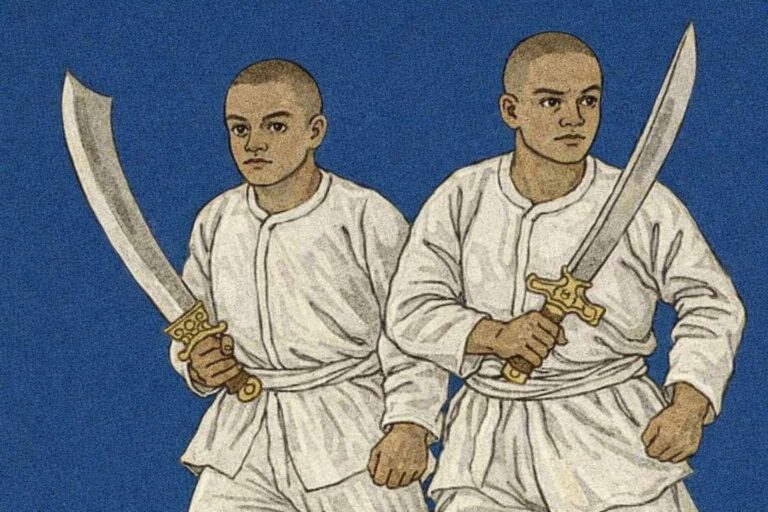
Moros were not afraid to die on the battlefield. As Muslims, they believe that martyrdom would give them a divine reward and a special place in heaven.
And how can you win against someone who aims to die?
(Insert Juramentados)
Spanish Left the Philippines Without Success Against the Moros
Back in Spain, the Spanish also had a problem.
Their home country asks them to send militaries in the Philippines to return to Spain because they need more men.
But their nightmare happened on May 1, 1898 when another colonizer followed them to Manila.
America Replaced Spain
Americans claimed that it was their duty to liberate people. But that’s only what they said.
Because some historians and analysts believed that Americans wanted to show their advanced weapons at that time. But they ran out of countries to colonize so they turned their eyes to the crumbling Spain.
Americans took over their colonies and were fighting over Cuba at that time.
While liberating Spain colonies, they followed the Spanish to the Philippines.
On the morning of May 1, 1898, a group of American modern warships led by Commodore George Dewey made a surprise attack on the Spanish squadron of an older and weaker fleet protecting its colony in Manila Bay.
Because of their modern warships, Americans captured and sank Spanish ships into the water in just a few hours with very few injuries.
This is where the turning point happened.
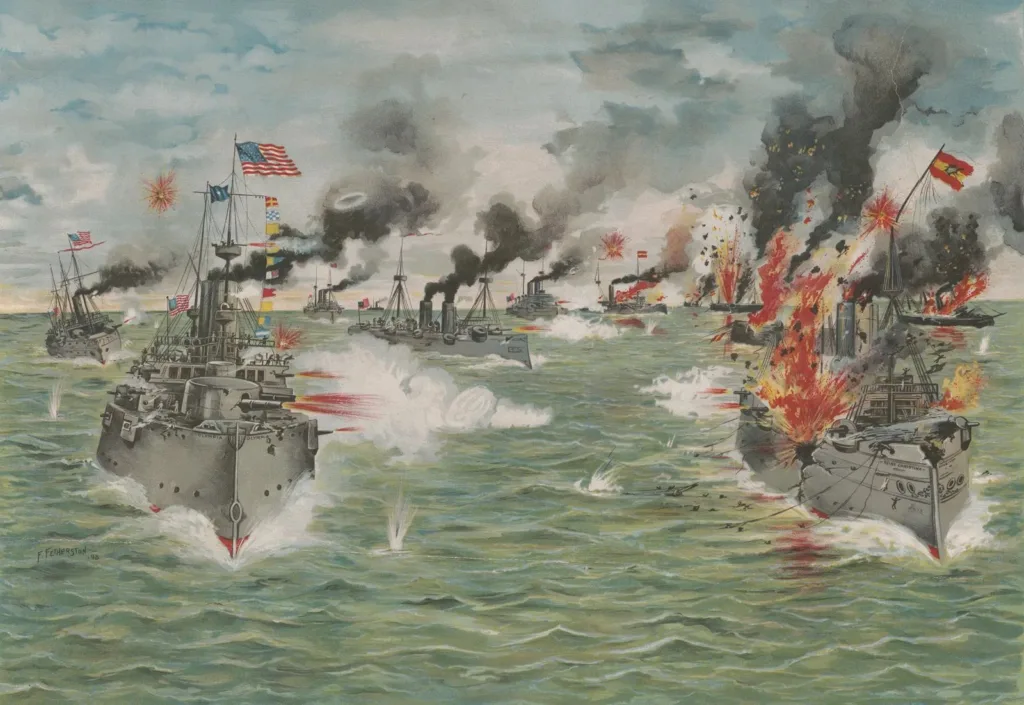
Had the Spaniards not colonized the Philippines, the Americans would not have gone there and made their way to Mindanao.
But they did.
Moros Were Deceived, not Conquered
When Americans arrived in Mindanao, they noticed the big difference between the Moros and the Christianized Filipinos up North.
They have their own sultans, their own laws (Shariah, and adat or custom), their own armies, and their own art. They had known that Moros were not used to being ruled by others.
“Mindanao is another world. They do not fear death, this makes them very hard to control.”
So they did not repeat the mistake of Spain. They didn’t go to direct conquest.
They befriended the Moro leaders through treaties to reassure them that they’re not there to fight.
Early rulers negotiated through a written formal agreement called a “Treaty”.
A treaty is not like the contract we know today. It’s a more complex written promise between rulers who recognize each other’s power or authority.
Because they knew that Moros were brave fighters. They knew that Moros fiercely ran with their swords and spears even against cannons and rifles. Because as Muslims, they’re not afraid to die on the battlefield.
So the Americans used subtle strategies. They used treaties not to recognize Moro’s independence but to buy time.
- Giving Moro Leaders Power. They appointed new governors without absolutely removing the powers of Moro Leaders. This was only a strategy to prevent doubts and resistance.
- Divide and Conquer. They searched for rival Moro leaders and tribes and then supported friendly parties. This gave them control over villages without fighting every village.
- Civilizing Efforts fronts. They built roads, schools, and hospitals. They introduced American laws, tax systems, and government councils, mixing civilization with administrative control.
- Demonstration of military superiority. U.S. troops attacked Moro strongholds in Sulu. This is to prevent…
Did you know…
Inherited Injustices: How Mindanao Became Part of the Philippines
After World War II, the United Nations was created. This pressured colonial powers to free their colonies. So they let go of the Philippines and recognized its independence on July 4, 1946.
When the Americans granted the Philippines independence, the Philippines also inherited Mindanao, since it was already administered by the Americans.
The twist is: the Mindanao they inherited had a weaker defense.
In the hands of early Philippine government, the Moros faced the following:
- Land Dispossession. The government opened many programs that encourage people from Luzon and Visayas to move to Mindanao, giving them free or cheap land, free transportation, and farming tools. Most of these lands were owned by Moros. They inherited them from their ancestors long before land titles were invented in the Philippines.
- Social Displacement. As settlers became the majority, the Moros were pushed back to the margins of their own land, losing political power, cultural authority, and access to towns. They became strangers in their own home.
- Economic Exploitation. Large foreign and foreign-affiliated private corporations opened in Mindanao, using its fertile soil, trees, and minerals. But the immense wealth they bring to the Philippines only benefited the people in Luzon and Visayas. Plus, these corporations discriminate against Muslims and would only hire Christian settlers.
- Massacres. While these happen, several massacres, rapes, and killings are committed against the Moro people, including women, old and infants.
Early Moro Leaders Tried Peaceful Means
Moro leaders wrote letters and manifestos to and for the government many times.
They talked about the killings, the land-grabbing, and explained how these all contradicted their laws.
Among these leaders were Sultan Jamalul Kiram II, Datu Piang, and Datu Udtog Matalam. Some Datus also wrote in groups.
One noticeable part of these letters is how they address the Christians as their “friends” and “neighbors” and even mention that they will protect them.
This shows that although religion plays a role, the war between Moros and the Philippines was not a war between religions. It was a war against oppression and injustice.
The Wake Up Call: Jabidah Massacre
In the 1870s, the Sultan of Sulu leased or ceded part of northern Borneo (Sabah) to the British North Borneo Company. A lease is like a rent but for long-term use.
So Marcos Sr. claimed Sabah (in Malaysia today) as once belonging to the Sultanate of Sulu. Hence, belonged to the Philippines too.
But beyond this legal claim, Sabah is rich in timber, oil, minerals, and fertile lands.
Like the early European colonizer mentality, Marcos not just wanted these resources but the entire land. And like the colonizer mentality, having it would make him look strong internationally.
So he organized “Operation Merdeka” and recruited young Tausug and promised them good food, good pay, and a stable job, thinking that their Muslims identities would make them easily infiltrate Sabah without suspicion.
However, days passed and they hadn’t received the good food and the good pay. They were abused and maltreated in the secret camp instead. After some time, the young Tausug found out why they’re trained.
They demanded their payments. They stopped following orders. And they said they didn’t want to die on the mission.
The trainees obviously no longer want to continue the mission. The officers couldn’t return them to their hometown because they might tell the public.
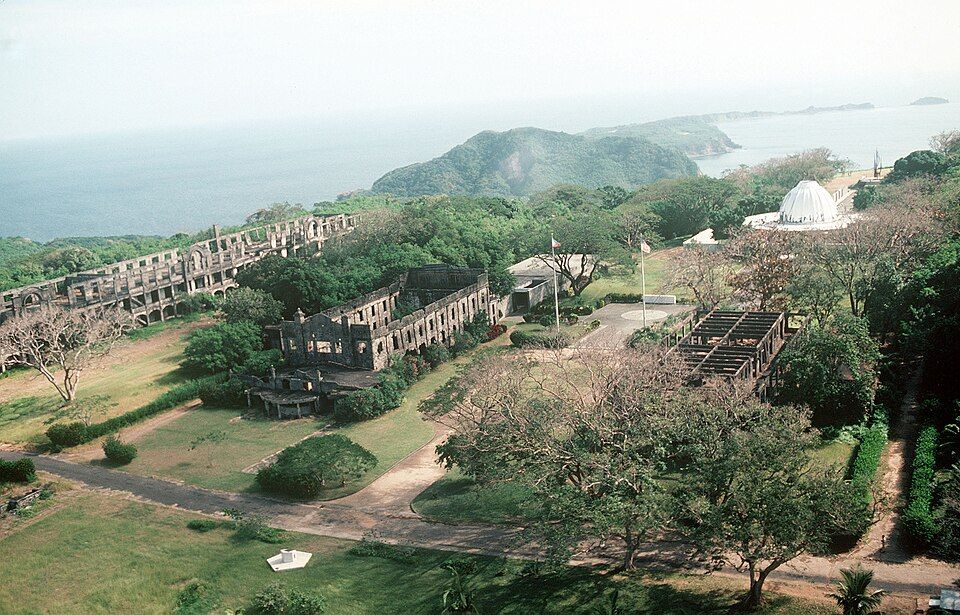
On March 18, 1968, the officers executed them at the Corregidor Island of Cavite. The official reports say that at least 11 trainees were killed. But many witnesses and Moro leaders believe that 20 or more than 60 were killed.
Only Survivor: Jibin Arula.
When the soldiers started killing the trainees, Jibin Arula, ran toward the cliff and jumped into the sea. He grew up on the Island of Sulu and it’s not unusual for islanders to swim long distances.
So Jibin then swam through the water until he reached another part of the island and fishermen rescued him.
News spread through towns.
This served as the last straw for the Bangsamoros.
They realized no more peaceful means would work and now it’s really time to fight back.
Zooming In To The Modern Times
When you go against the government with clearly different political objectives, that’s rebellion.
But if you stand your ground and refuse to be treated poorly, that’s resistance.
And Moros didn’t stop resisting.
Contemporary Moro Resistance
Years of oppression made the Moros rely on their fighters. These fighters later represented their voice and interest on the negotiation table.
There were two major military groups that led the Moros: MNLF and MILF.
Once again, the Moros used the strength they had had for ages: military strength, international relations, the same ones that scared the Spanish and the Americans, fighting until death.
Moro National Liberation Front (MNLF)
Around the 1970s, MNLF emerged.
One thing about Islam is they consider every Muslim brother wherever they are.
When Muslim leaders abroad heard what was happening to the Muslims in the Philippines, they poured their support.
Libya gave them training, money, weapons, they had support from the Organization of Islamic Cooperation (OIC), and training in Malaysia and the Middle East.
In later years, they were able to capture AFP weapons, smuggled arms through maritime routes (Sulu Sea, Celebes Sea) and they made their own firearms.
The MNLF was recognized as the official representative of the Bangsamoro people giving them diplomatic power, not just guns because most of them studied abroad and could speak multiple languages.
When MNLF were organized, most of the members voluntarily joined, not recruited. Since most of them were sons who watched their fathers lose their lands.
They’re already angry and ready to fight at that time.
MORO ISLAMIC LIBERATION FRONT (MILF)
In the later years, MILF, a younger but fast-growing faction that broke from MNLF, gained more respect and trust from the Moros.
Because unlike the national secularists MNLF, they strictly adhere to Islam.
They formally broke out from MNLF in 1977 and became their formal representative around the 1990s.
Most of the MILF members are MNLF commanders. Like MNLF, they also had vast Islamic networks.
Some of them trained in Pakistan, Afghanistan, and Libya. They already knew guerrilla warfare and built their base camps in central Mindanao.
At home, communities support them in ways they can. They give sadaqa and Zakat, and they collect donations from Moros overseas.
Seeing MILF as the largest Moro freedom fighters at that time, the government negotiated with them instead of the MNLF.
From Armed Struggle to Peaceful Dialogue
War is exhausting.
Instead of investing your money and time to grow and get your country richer, you use them to buy war tanks, guns, and ammos.
And you also have to feed your armies, give them good pay so they’d be willing to die for the country. And then, you also have to pay their families.
The government realized that the money they spent on war could be better used in building schools, hospitals, and roads.
Plus, Muslim-majority countries like Indonesia, Libya, and others recognized the Moro struggle brought the issues in international forums.
This pressured President Marcos to enter into negotiation to avoid diplomatic isolation and not destroy his relationship with other countries.
(Table)
Modern day
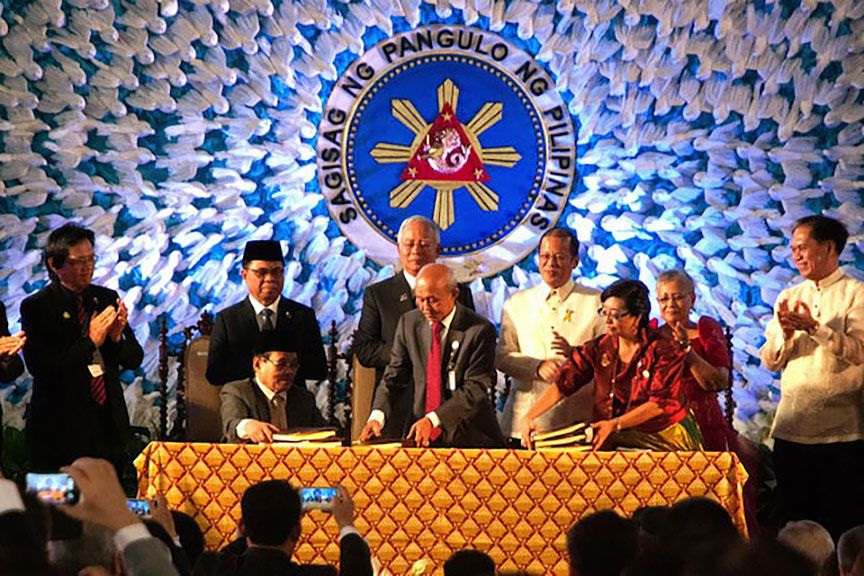
After a decade of negotiations and revisions, BARMM replaced ARMM.
The Moros became the first and only region in the Philippines that had their own autonomous government.
Whereas the Philippines is a presidential country, BARMM has a parliamentary system that matches their political culture.
Long story short: the Moros finally won the autonomy they’ve been fighting for.

Why Bangsamoros Have Their Own Autonomous Government
Bangsamoros had always been ruling themselves for centuries. They had their own rulers, laws, and traditions.
When outsiders ruled, their system was ignored. But the Moros attempted a replacement which only caused wars between the two. And the worst part was that the Moros did not surrender.
After decades of peace talks, promises, deceptions, and walking out of the negotiation table, the Philippines and the Moros finally created the BARMM.
Through this, Moros can make decisions about their schools, culture, and laws.
Autonomy is Their Right, not a Government’s Gift
Autonomy is a big deal for the Bangsamoros because it’s their right legally and morally.
It’s their right legally because they talked with the government for many, many years to recognize their different culture, identity, and beliefs.
After years of struggle, their rights were finally recognized through agreements that later turned into the Bangsamoro Organic Law.
It’s also their right morally because for centuries, they have had their own political system that worked. They point out the ways suits them that the government ignored and suppressed for decades.The autonomy is about justice and correcting historical injustices that keep on erasing or misrepresenting them.
Let’s face it: BARMM is not perfect, no government is.
But the self-rule for the Bangsamoros connects them to how their ancestors lived.
It’s not that they think they’re special, they only want to come home.
Disclaimer: The Bangsamoro Manual supports the peace process and its gains. It does not encourage violence, extremism, or terrorism in any form. This article draws from recorded history and scholarly sources. It discusses past conflicts and resistance only to explain historical realities that can give context to the present issues faced by the Bangsamoros, necessary for critical thinking and decision-making.